
Information about our registrants
When an individual is on our Register we call them a registrant.
Registrants and registrations
Table 2 shows the total number of registrants alongwith the number of registrations held by them. Thereare more registrations than registrants as some registrants are registered inmore than one category of registration.
{{fs-regreport26-table2="/section-components"}}
Since the 2023 decade-high, both registrants and registrations have declined. Registrations have fallen faster,suggesting that registrants now hold fewer registration categories on average.
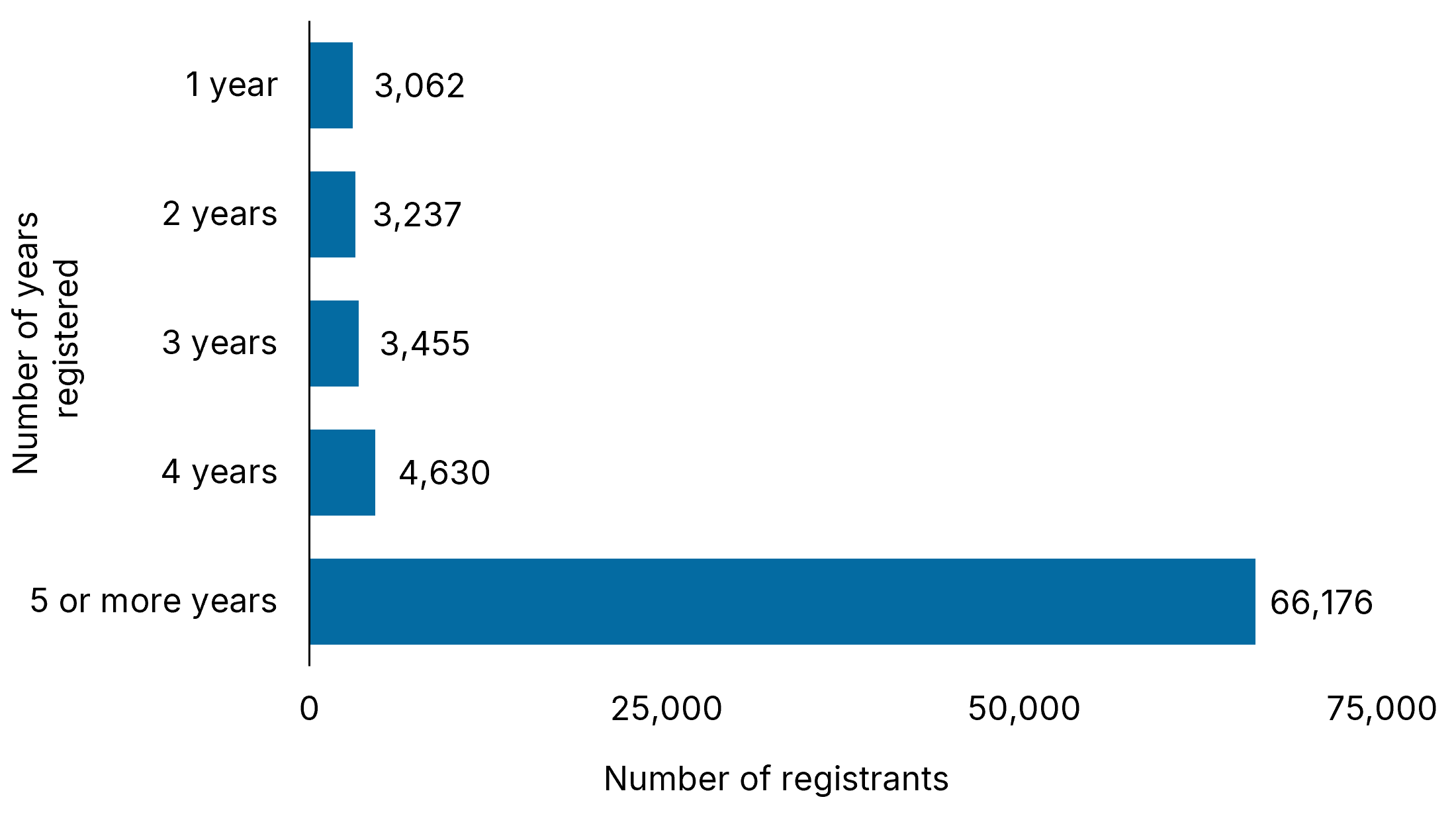
At 31 March 2026, most registrants had been registered with GTC Scotlandfor five years ormore. This group accounted for 66,176 registrants, or 82.14% of the Register,while 17.86% had beenregistered for between one and four years.
<span id="es-chart-01" class="table_caption" style="text-align:center; margin: auto; display: block; padding-top: 3.5rem;" fs-test-element="reg-report-title-es-chart-01">Chart 1: Number of registrants by number of years registered</span>
At 31 March 2026, most registrants held one registration: 70,386 registrants, or 87.37%, held one registration, while 12.63% held multiple registrations.
<span id="es-chart-01" class="table_caption" style="text-align:center; margin: auto; display: block; padding-top: 3.5rem;" fs-test-element="reg-report-title-es-chart-01">Chart 2: Number of registrants by number of registrations held</span>
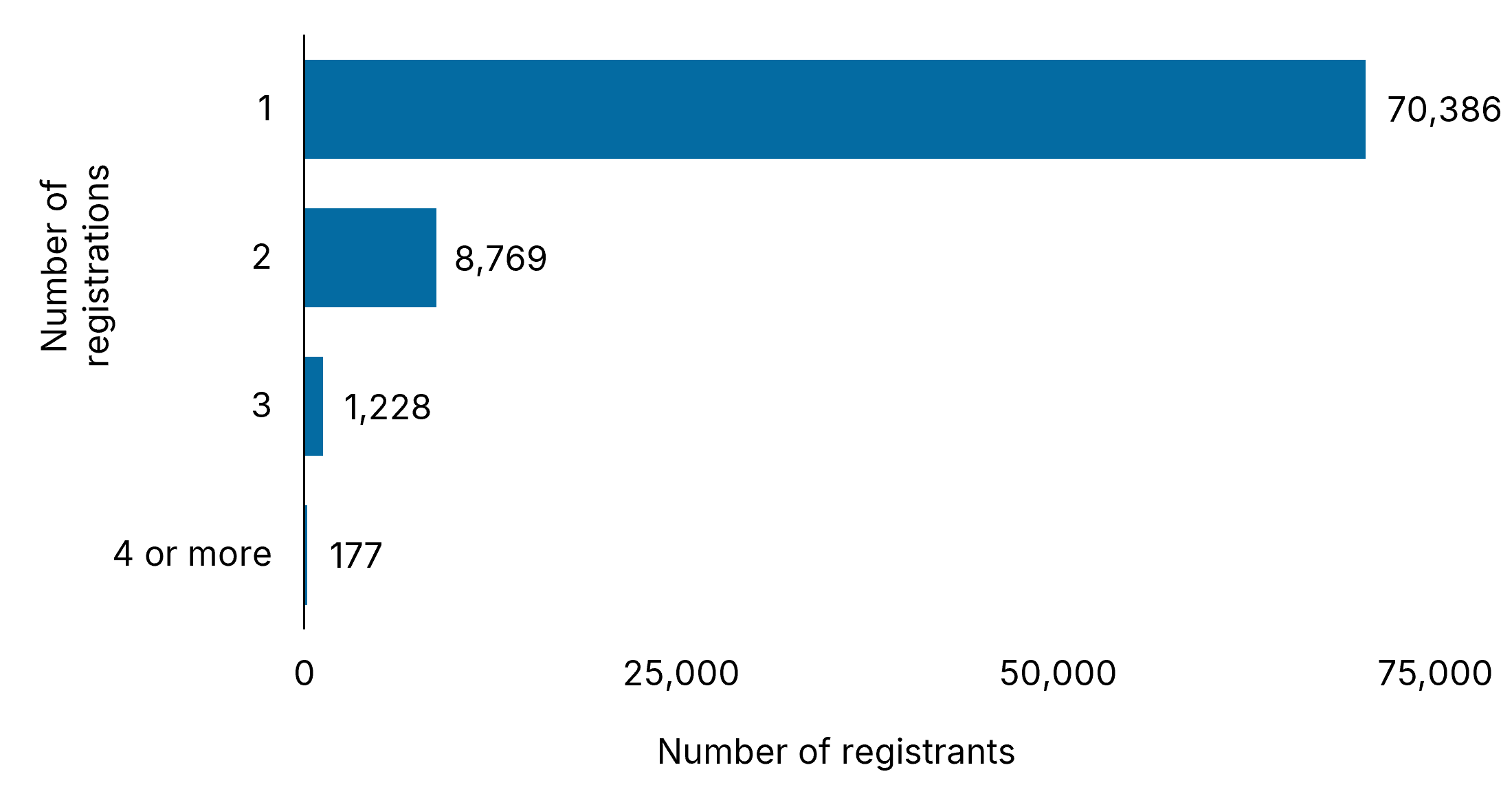
Table 3 shows the number of registrants who hold registration in each of the registration categories.
{{fs-regreport26-table3="/section-components"}}
* historical registration categories that are valid but no longer in active use
GTC Scotland has three active registration statuses: Provisional Registration, Provisional (Conditional) Registration and Full Registration.
As at 31 August 2025, there were 4,137 registrants who held only Provisional Registration (4,031 in August 2024). Of these teachers, 2,340 were working towards Full Registration through the Scottish Government’s Teacher Induction Scheme (TIS) and 1,797 were taking the Flexible Route (FR) (TIS 2,313, FR 1,718, August 2024).
For the third year in a row, fewer teachers transitioned from provisional registration to full registration. 2,450 registrants transitioned from being provisionally registered to holding Full Registration . This is a 12% reduction from 2024-25 (2,785) and an 18% reduction from 2023-24 (2,989).
Of these 2,450 registrants who achieved full registration:
- 2,092 joined the Register via the Qualified in Scotland ITE route and completed the Teacher Induction Scheme .
- 147 joined the Register via the Qualified in Scotland ITE route and completed the Flexible Route .
- 172 joined the Register via the Qualified outside Scotland route and completed the Flexible Route.
- 39 joined the Register with Provisional Conditional registration in Further Education .
Table 4 shows the number of individual registrants, broken down by registration status. The numbers of individual registrants with Provisional Registration and Provisional (Conditional) Registration are included together in the provisionally registered row.
{{fs-regreport26-table4="/section-components"}}
*historical registration status -valid but no longer in active use
From 31 March 2025 to 31 March 2026, there was a:
- 0.65% decrease in fully registered registrants (Full (General) Registration)
- 1.15% increase in provisionally registered registrants
From 31 March 2023 to 31 March 2026, there was a:
- 0.79% decrease in fully registered registrants
- 3.43% decrease in provisionally registered registrants
Registrant sex and age
We ask registrants for specific information in relation to their sex and hold information in relation to the age of registrants. Registrants provide this information and so the statistics we hold are based on the information we receive from them.
Table 5 shows the self-declared sex of registrants with Chart 3 showing this as a percentage of total registrants over time.
{{fs-regreport26-table5="/section-components"}}
Table 5 shows that the self-declared sex profile of the Register has remained broadly stable between 2023 and 2026, with small decreases in both female and male registrants and a larger reduction in records with no sex recorded following data cleansing in 2023.
<span id="es-chart-01" class="table_caption" style="text-align:center; margin: auto; display: block; padding-top: 3.5rem;" fs-test-element="reg-report-title-es-chart-01">Chart 3: Registrant self-declared sex at 31 March (2023, 2024, 2025 and 2026) – all registrants</span>
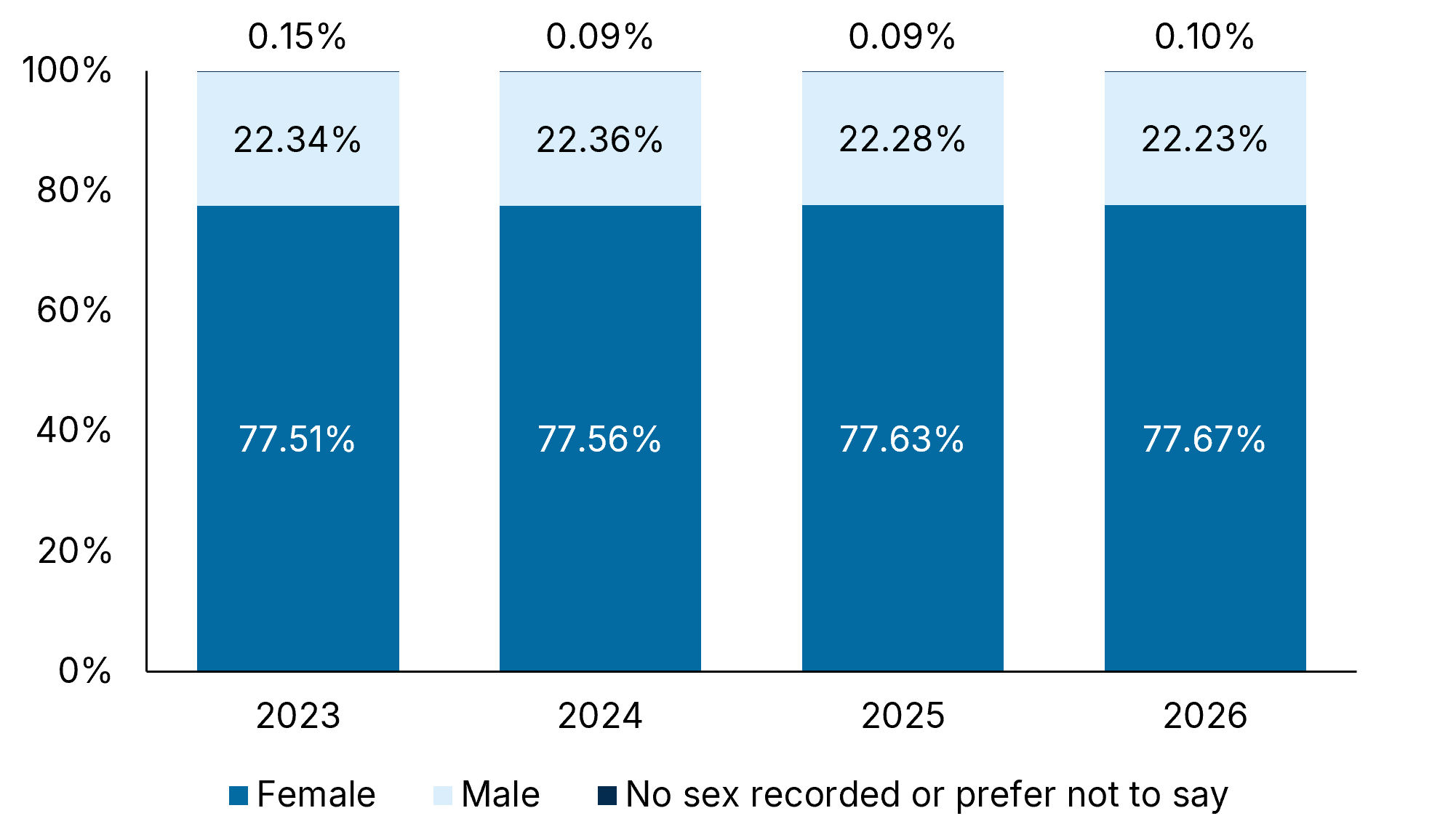
Chart 4 shows the self-declared sex of registrants as a percentage by registration category held as at 31 March 2026.
<span id="es-chart-01" class="table_caption" style="text-align:center; margin: auto; display: block; padding-top: 3.5rem;" fs-test-element="reg-report-title-es-chart-01">Chart 4: Registrant self-declared sex at 31 March 2026 by registration category</span>
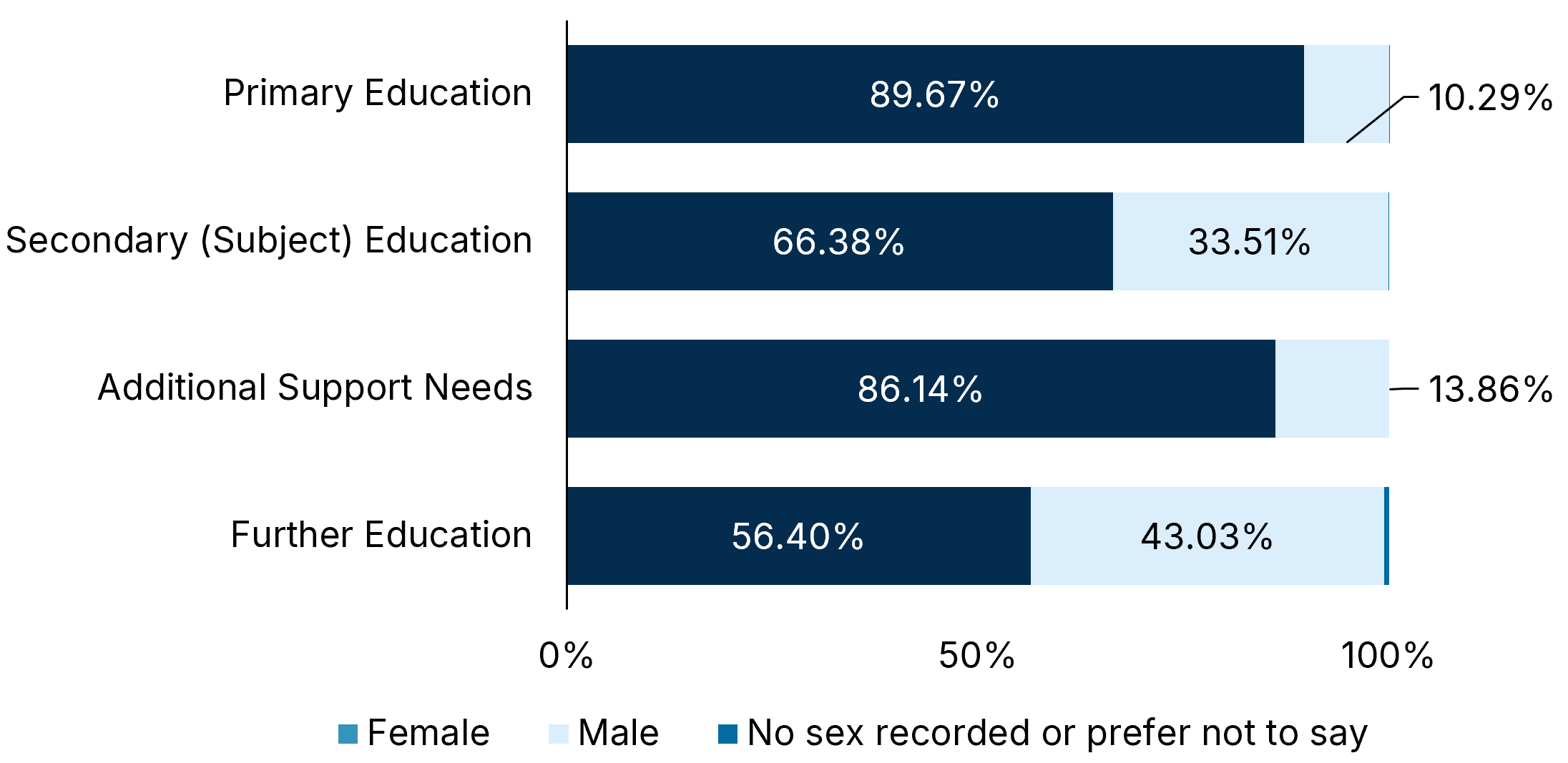
Chart 4 shows clear variation in the self-declared sex profile across registration categories. Primary Education and Additional Support Needs have the highest proportion of female registrants, while Secondary Education and Further Education have a more balanced profile. Further Education has the highest proportion of male registrants compared with the other categories.
Table 6 summarises the percentage of registrants in the following age brackets rounded to the nearest percentage and Chart 5 shows the information for 31 March 2026.
{{fs-regreport26-table6="/section-components"}}
Table 6 shows that the Register’s age profile has remained broadly stable, with most registrants under 46 and only small changes across age brackets since 2023. Rounding to the nearest percentage means that these may not total 100%.
<span id="es-chart-01" class="table_caption" style="text-align:center; margin: auto; display: block; padding-top: 3.5rem;" fs-test-element="reg-report-title-es-chart-01">Chart 5: Percentage of all registrants within each age grouping</span>
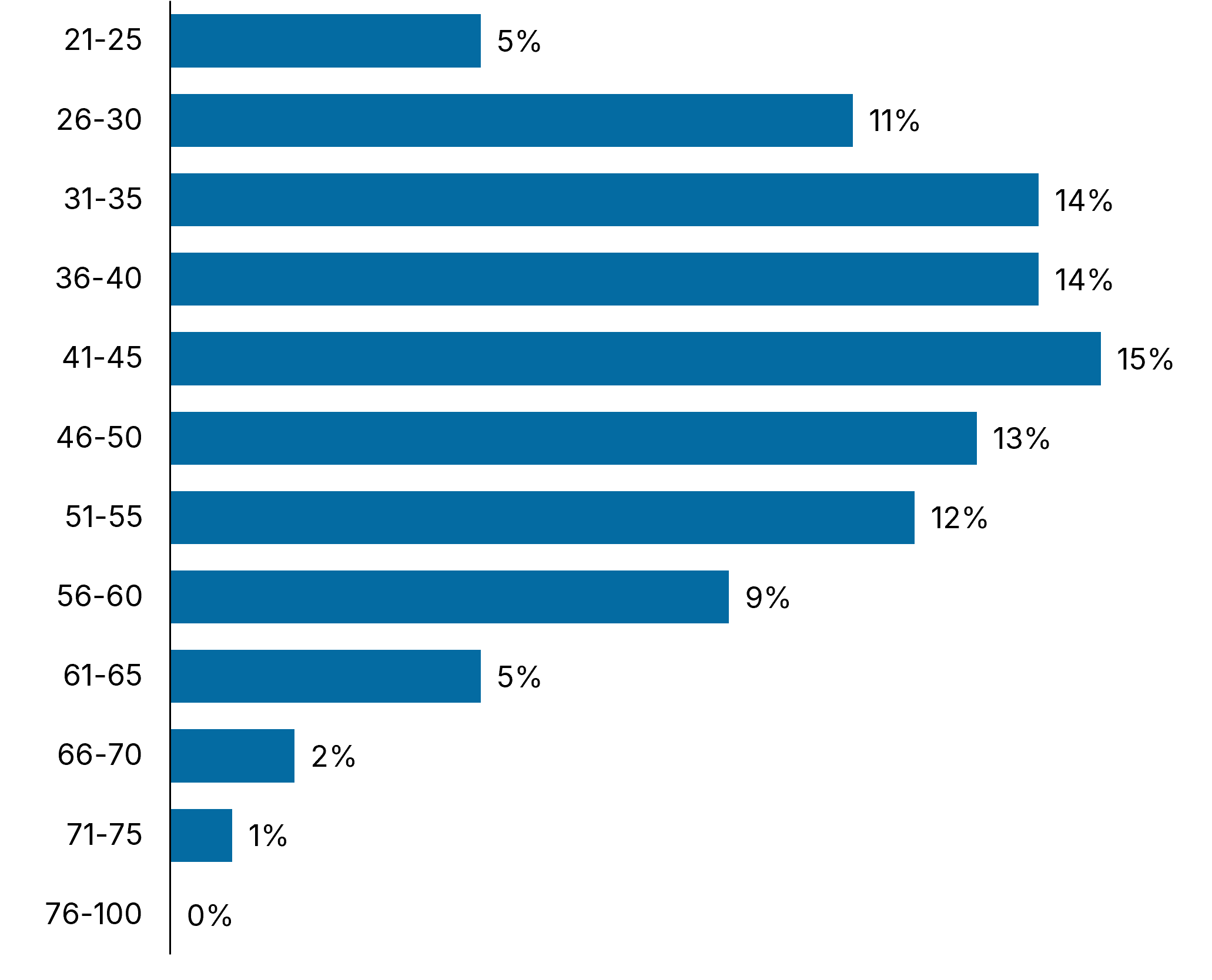
The age brackets of registrants show that almost three fifths of the Register is under 46 years old (59%), over one fifth is between 46 and 55 years old (24%), and almost one fifth is over 55 years old (16%).
Further sex and age information for registrants broken into registration categories held is explored further below.
Table 7 shows self-declared sex and age information for Primary Education, Table 8 for Secondary (Subject) Education, Table 9 for Additional Support Needs and Table 10 for Further Education.
{{fs-regreport26-table7="/section-components"}}
{{fs-regreport26-table8="/section-components"}}
{{fs-regreport26-table9="/section-components"}}
{{fs-regreport26-table10="/section-components"}}
These tables show the average (and median) ages of teachers registered in the category of Primary Education and/or Secondary (Subject) Education being very similar. Almost all averages for these categories fall within the 41-45 age bracket.
The average (and median) ages of teachers registered in the categories of Further Education or Additional Support Needs show that the average age is older for registrants in these categories. Average ages for Additional Support Needs fall within the 46-50 age bracket with average ages for Further Education falling within the 51-55 age bracket.
The older average age of teachers registered in Additional Support Needs may reflect that this is typically a specialism built over time. Similarly, teachers registered in Further Education have an older age profile than teachers of school education. This may reflect the route into the profession with many college lecturers entering the profession after establishing themselves in another career and bringing this prior experience to the role.
Gaelic registration and Gaelic Medium Education
As at 31 March 2026, 365 registrants have self-declared that they can deliver in Gaelic Medium Education (GME).
131 registrants hold Gaelic secondary subject registration, of which there are:
- 115 Full Registrations
- 13 Provisional Registrations
- 3 Provisional (Conditional) Registrations
Of the 365 GME registrants, 46 also hold Gaelic registration (12.60%).
Of the 365 GME registrants, 46 also hold Gaelic registration (12.60%).
Of the 131 registrants that hold a Gaelic registration, 46 registrants have self-declared to us that they can deliver in GME (35.11%).
As at 18 May 2026, 25 of the 2,514 individuals (0.99%) with a Teacher Induction Scheme (TIS) placement for academic year 2026-27 declared they can deliver in GME. As at 19 May 2025, 27 of the 2,744 individuals (0.98%) with a TIS placement for academic year 2025-26 declared they can deliver in GME.
Table 11 shows the variation of the Languages – Gaelic registration numbers over the past 3 years (2023-24, 2024-25 and 2025-26).
{{fs-regreport26-table11="/section-components"}}
Table 12 shows the number of registrants that are registered only in Gaelic or registered in Gaelic and at least one other registration.
{{fs-regreport26-table12="/section-components"}}
Table 13 shows the self-declared sex of registrants that hold Gaelic registration, along with the average and median age.
{{fs-regreport26-table13="/section-components"}}
Table 14 shows the number of registrants that hold Gaelic registration by the following age brackets.
{{fs-regreport26-table14="/section-components"}}
Employers of registrants
Table 15 shows the number of registrants by employer group. This information is self- declared by registrants and is provided voluntarily.
We are proposing to mandate the collection of employer data as part of a forthcoming review of our Registration Rules. We believe this would strengthen the data collected, enabling more robust analysis and providing greater confidence in our understanding over time.
In table 15, registrants under the employer category of ‘Supply’ are those who have said that they are employed as a supply teacher but have not specified a particular employer type.
This supply figure does not include registrants who have told us that they are working as a supply teacher and who have shared an employer group with us (for example local authority/ies) - this is included elsewhere.
{{fs-regreport26-table15="/section-components"}}
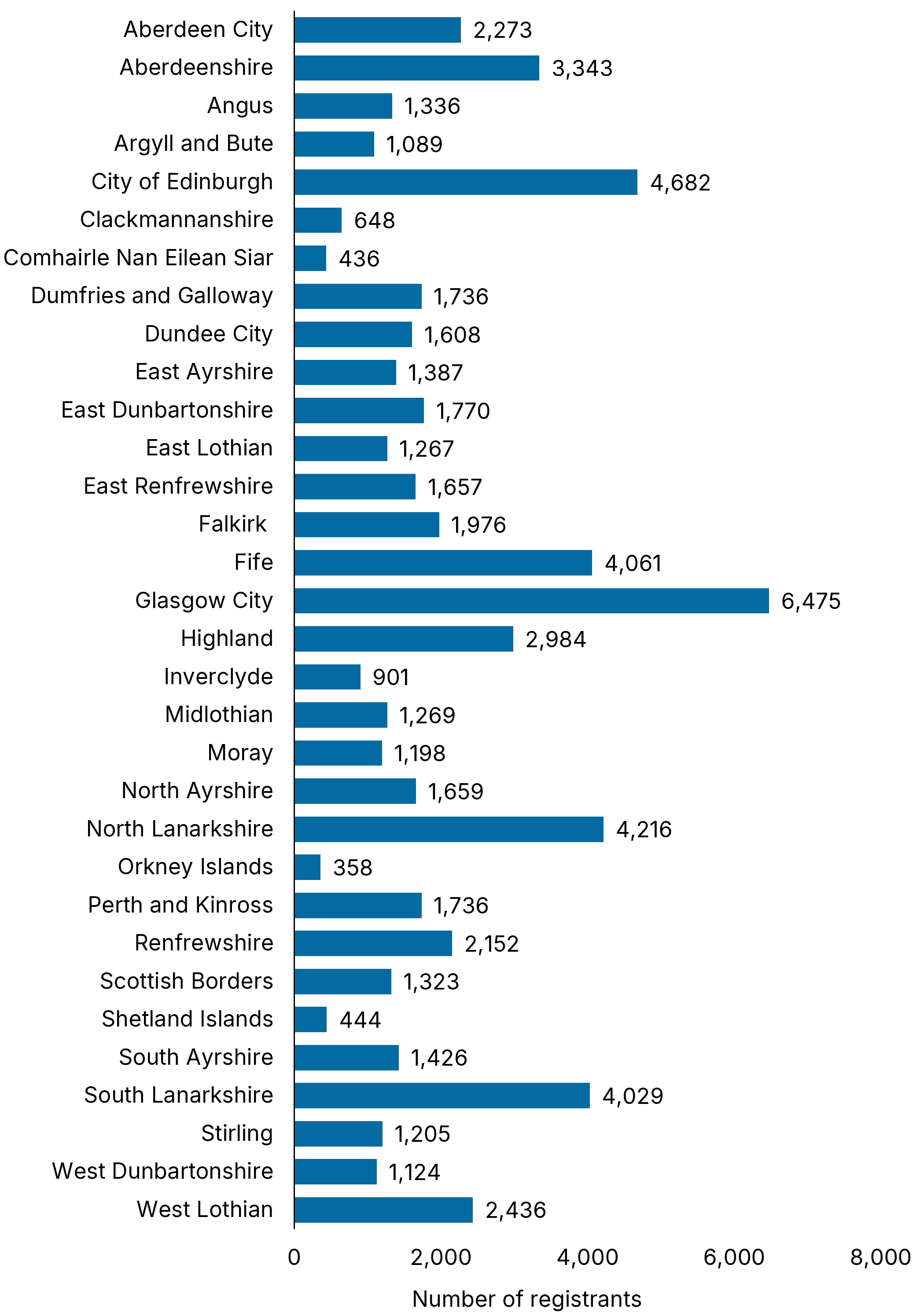
Chart 6 shows the number of registrants per local authority in Scotland. This information is self-declared by registrants.
<span id="es-chart-01" class="table_caption" style="text-align:center; margin: auto; display: block; padding-top: 3.5rem;" fs-test-element="reg-report-title-es-chart-01">Chart 6: Number of registrants by local authority in Scotland (self-declared)</span>
When an individual is on our Register we call them a registrant.
Registrants and registrations
Table 2 shows the total number of registrants alongwith the number of registrations held by them. Thereare more registrations than registrants as some registrants are registered inmore than one category of registration.
{{fs-regreport26-table2="/section-components"}}
Since the 2023 decade-high, both registrants and registrations have declined. Registrations have fallen faster,suggesting that registrants now hold fewer registration categories on average.
At 31 March 2026, most registrants had been registered with GTC Scotlandfor five years ormore. This group accounted for 66,176 registrants, or 82.14% of the Register,while 17.86% had beenregistered for between one and four years.
<span id="es-chart-01" class="table_caption" style="text-align:center; margin: auto; display: block; padding-top: 3.5rem;" fs-test-element="reg-report-title-es-chart-01">Chart 1: Number of registrants by number of years registered</span>
At 31 March 2026, most registrants held one registration: 70,386 registrants, or 87.37%, held one registration, while 12.63% held multiple registrations.
<span id="es-chart-01" class="table_caption" style="text-align:center; margin: auto; display: block; padding-top: 3.5rem;" fs-test-element="reg-report-title-es-chart-01">Chart 2: Number of registrants by number of registrations held</span>
Table 3 shows the number of registrants who hold registration in each of the registration categories.
{{fs-regreport26-table3="/section-components"}}
* historical registration categories that are valid but no longer in active use
GTC Scotland has three active registration statuses: Provisional Registration, Provisional (Conditional) Registration and Full Registration.
As at 31 August 2025, there were 4,137 registrants who held only Provisional Registration (4,031 in August 2024). Of these teachers, 2,340 were working towards Full Registration through the Scottish Government’s Teacher Induction Scheme (TIS) and 1,797 were taking the Flexible Route (FR) (TIS 2,313, FR 1,718, August 2024).
For the third year in a row, fewer teachers transitioned from provisional registration to full registration. 2,450 registrants transitioned from being provisionally registered to holding Full Registration . This is a 12% reduction from 2024-25 (2,785) and an 18% reduction from 2023-24 (2,989).
Of these 2,450 registrants who achieved full registration:
- 2,092 joined the Register via the Qualified in Scotland ITE route and completed the Teacher Induction Scheme .
- 147 joined the Register via the Qualified in Scotland ITE route and completed the Flexible Route .
- 172 joined the Register via the Qualified outside Scotland route and completed the Flexible Route.
- 39 joined the Register with Provisional Conditional registration in Further Education .
Table 4 shows the number of individual registrants, broken down by registration status. The numbers of individual registrants with Provisional Registration and Provisional (Conditional) Registration are included together in the provisionally registered row.
{{fs-regreport26-table4="/section-components"}}
*historical registration status -valid but no longer in active use
From 31 March 2025 to 31 March 2026, there was a:
- 0.65% decrease in fully registered registrants (Full (General) Registration)
- 1.15% increase in provisionally registered registrants
From 31 March 2023 to 31 March 2026, there was a:
- 0.79% decrease in fully registered registrants
- 3.43% decrease in provisionally registered registrants
Registrant sex and age
We ask registrants for specific information in relation to their sex and hold information in relation to the age of registrants. Registrants provide this information and so the statistics we hold are based on the information we receive from them.
Table 5 shows the self-declared sex of registrants with Chart 3 showing this as a percentage of total registrants over time.
{{fs-regreport26-table5="/section-components"}}
Table 5 shows that the self-declared sex profile of the Register has remained broadly stable between 2023 and 2026, with small decreases in both female and male registrants and a larger reduction in records with no sex recorded following data cleansing in 2023.
<span id="es-chart-01" class="table_caption" style="text-align:center; margin: auto; display: block; padding-top: 3.5rem;" fs-test-element="reg-report-title-es-chart-01">Chart 3: Registrant self-declared sex at 31 March (2023, 2024, 2025 and 2026) – all registrants</span>
Chart 4 shows the self-declared sex of registrants as a percentage by registration category held as at 31 March 2026.
<span id="es-chart-01" class="table_caption" style="text-align:center; margin: auto; display: block; padding-top: 3.5rem;" fs-test-element="reg-report-title-es-chart-01">Chart 4: Registrant self-declared sex at 31 March 2026 by registration category</span>
Chart 4 shows clear variation in the self-declared sex profile across registration categories. Primary Education and Additional Support Needs have the highest proportion of female registrants, while Secondary Education and Further Education have a more balanced profile. Further Education has the highest proportion of male registrants compared with the other categories.
Table 6 summarises the percentage of registrants in the following age brackets rounded to the nearest percentage and Chart 5 shows the information for 31 March 2026.
{{fs-regreport26-table6="/section-components"}}
Table 6 shows that the Register’s age profile has remained broadly stable, with most registrants under 46 and only small changes across age brackets since 2023. Rounding to the nearest percentage means that these may not total 100%.
<span id="es-chart-01" class="table_caption" style="text-align:center; margin: auto; display: block; padding-top: 3.5rem;" fs-test-element="reg-report-title-es-chart-01">Chart 5: Percentage of all registrants within each age grouping</span>
The age brackets of registrants show that almost three fifths of the Register is under 46 years old (59%), over one fifth is between 46 and 55 years old (24%), and almost one fifth is over 55 years old (16%).
Further sex and age information for registrants broken into registration categories held is explored further below.
Table 7 shows self-declared sex and age information for Primary Education, Table 8 for Secondary (Subject) Education, Table 9 for Additional Support Needs and Table 10 for Further Education.
{{fs-regreport26-table7="/section-components"}}
{{fs-regreport26-table8="/section-components"}}
{{fs-regreport26-table9="/section-components"}}
{{fs-regreport26-table10="/section-components"}}
These tables show the average (and median) ages of teachers registered in the category of Primary Education and/or Secondary (Subject) Education being very similar. Almost all averages for these categories fall within the 41-45 age bracket.
The average (and median) ages of teachers registered in the categories of Further Education or Additional Support Needs show that the average age is older for registrants in these categories. Average ages for Additional Support Needs fall within the 46-50 age bracket with average ages for Further Education falling within the 51-55 age bracket.
The older average age of teachers registered in Additional Support Needs may reflect that this is typically a specialism built over time. Similarly, teachers registered in Further Education have an older age profile than teachers of school education. This may reflect the route into the profession with many college lecturers entering the profession after establishing themselves in another career and bringing this prior experience to the role.
Gaelic registration and Gaelic Medium Education
As at 31 March 2026, 365 registrants have self-declared that they can deliver in Gaelic Medium Education (GME).
131 registrants hold Gaelic secondary subject registration, of which there are:
- 115 Full Registrations
- 13 Provisional Registrations
- 3 Provisional (Conditional) Registrations
Of the 365 GME registrants, 46 also hold Gaelic registration (12.60%).
Of the 365 GME registrants, 46 also hold Gaelic registration (12.60%).
Of the 131 registrants that hold a Gaelic registration, 46 registrants have self-declared to us that they can deliver in GME (35.11%).
As at 18 May 2026, 25 of the 2,514 individuals (0.99%) with a Teacher Induction Scheme (TIS) placement for academic year 2026-27 declared they can deliver in GME. As at 19 May 2025, 27 of the 2,744 individuals (0.98%) with a TIS placement for academic year 2025-26 declared they can deliver in GME.
Table 11 shows the variation of the Languages – Gaelic registration numbers over the past 3 years (2023-24, 2024-25 and 2025-26).
{{fs-regreport26-table11="/section-components"}}
Table 12 shows the number of registrants that are registered only in Gaelic or registered in Gaelic and at least one other registration.
{{fs-regreport26-table12="/section-components"}}
Table 13 shows the self-declared sex of registrants that hold Gaelic registration, along with the average and median age.
{{fs-regreport26-table13="/section-components"}}
Table 14 shows the number of registrants that hold Gaelic registration by the following age brackets.
{{fs-regreport26-table14="/section-components"}}
Employers of registrants
Table 15 shows the number of registrants by employer group. This information is self- declared by registrants and is provided voluntarily.
We are proposing to mandate the collection of employer data as part of a forthcoming review of our Registration Rules. We believe this would strengthen the data collected, enabling more robust analysis and providing greater confidence in our understanding over time.
In table 15, registrants under the employer category of ‘Supply’ are those who have said that they are employed as a supply teacher but have not specified a particular employer type.
This supply figure does not include registrants who have told us that they are working as a supply teacher and who have shared an employer group with us (for example local authority/ies) - this is included elsewhere.
{{fs-regreport26-table15="/section-components"}}
Chart 6 shows the number of registrants per local authority in Scotland. This information is self-declared by registrants.
<span id="es-chart-01" class="table_caption" style="text-align:center; margin: auto; display: block; padding-top: 3.5rem;" fs-test-element="reg-report-title-es-chart-01">Chart 6: Number of registrants by local authority in Scotland (self-declared)</span>

End of document
"
"
"
"
"
"


6
/
10