
Allegation categories profiled in more detail
Alcohol/drugs allegations
Our analysis has found that a total of 22 cases were considered that involved allegations related to alcohol and/or drugs. Almost half (46%) of these allegations related to use of alcohol or drugs in the workplace or other professional settings. The other half of cases were related to drugs offences.
<span id="es-chart-01" class="table_caption" style="text-align:center; margin: auto; display: block; padding-top: 3.5rem;" fs-test-element="reg-report-title-es-chart-01">Detailed allegation analysis for alcohol/drugs cases 2017 to 2022</span>

Bullying/discrimination allegations
A total of 62 cases were considered that involved allegations related to bullying and/or discrimination. Just over two-thirds (68%) of bullying and/or discrimination cases related to allegations of behaviours that occurred with colleagues or learners. One-fifth (21%) of cases related to allegations of use of discriminatory language online or on social media.
<span id="es-chart-01" class="table_caption" style="text-align:center; margin: auto; display: block; padding-top: 3.5rem;" fs-test-element="reg-report-title-es-chart-01">Detailed allegation analysis for bullying/discrimination cases 2017 to 2022</span>

Child abuse/neglect allegations
We considered a total of 38 cases that involved allegations related to child abuse and/or neglect. Almost three-quarters (71%) of child abuse/neglect cases related to some form of sexual misconduct. One-third (34%) of cases related to cases of sexual abuse within a school or professional setting, with a further 3 cases (8%) relating to inappropriate relationships with learners. One-fifth (21%) of these cases related to the possession or making of indecent images of children.
<span id="es-chart-01" class="table_caption" style="text-align:center; margin: auto; display: block; padding-top: 3.5rem;" fs-test-element="reg-report-title-es-chart-01">Detailed allegation analysis for child abuse/neglect cases 2017 to 2022</span>

Child/adult safeguarding allegations
There were 31 cases considered that involved allegations related to child or vulnerable adult safeguarding. Most (84%) child or vulnerable adult safeguarding cases related to failures to follow safeguarding procedures.
<span id="es-chart-01" class="table_caption" style="text-align:center; margin: auto; display: block; padding-top: 3.5rem;" fs-test-element="reg-report-title-es-chart-01">Detailed allegation analysis for child/adult safeguarding cases 2017 to 2022</span>

Dishonesty allegations
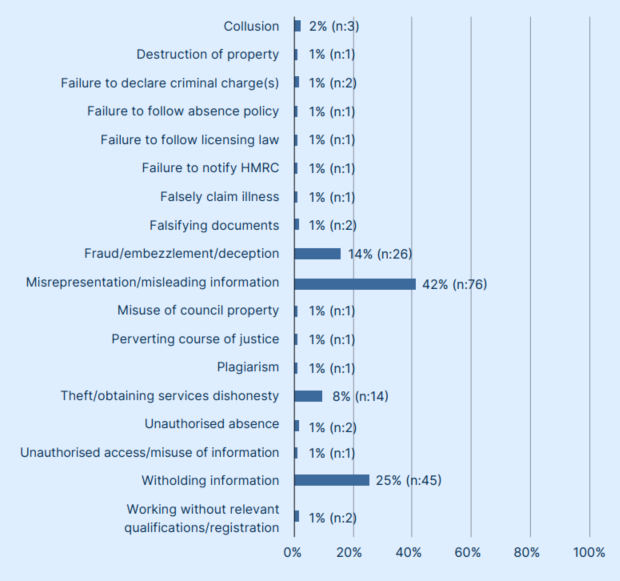
Dishonesty is a common allegation seen in our cases. There were 181 allegations involving dishonesty. Two-thirds (67%) of these related to allegations of misrepresentation of information, provision of misleading information or withholding information.
<span id="es-chart-01" class="table_caption" style="text-align:center; margin: auto; display: block; padding-top: 3.5rem;" fs-test-element="reg-report-title-es-chart-01">Detailed allegation analysis for dishonesty cases 2017 to 202</span>
Driving offence allegations
There were 169 cases that related to driving offences. Almost half (43.8%) of these related to allegations of drink driving. One-fifth (20.7%) were allegations of speeding. Twenty-five (14.8%) cases were allegations of careless or dangerous driving.
<span id="es-chart-01" class="table_caption" style="text-align:center; margin: auto; display: block; padding-top: 3.5rem;" fs-test-element="reg-report-title-es-chart-01">Detailed allegation analysis for driving offence cases 2017 to 2022</span>

Inadequate learner care/support allegations
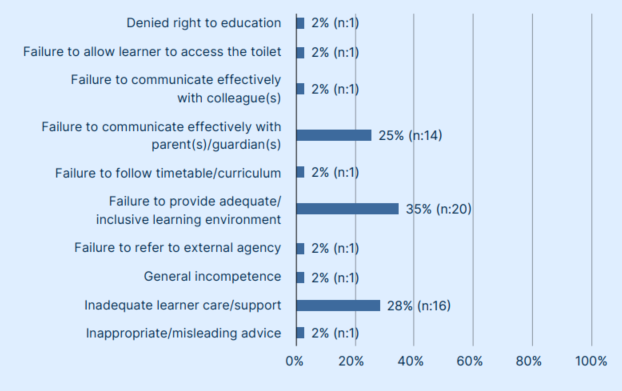
Fifty-seven cases related to allegations of inadequate learner care or support. Just over one-third (35%) of these related to allegations of failing to provide an adequate or inclusive learning environment. Just over a quarter (28%) of cases involved general allegations of inadequate learner care.
<span id="es-chart-01" class="table_caption" style="text-align:center; margin: auto; display: block; padding-top: 3.5rem;" fs-test-element="reg-report-title-es-chart-01">Detailed allegation analysis for inadequate learner care/supportcases 2017 to 2022</span>
Inappropriate behaviour/language allegations
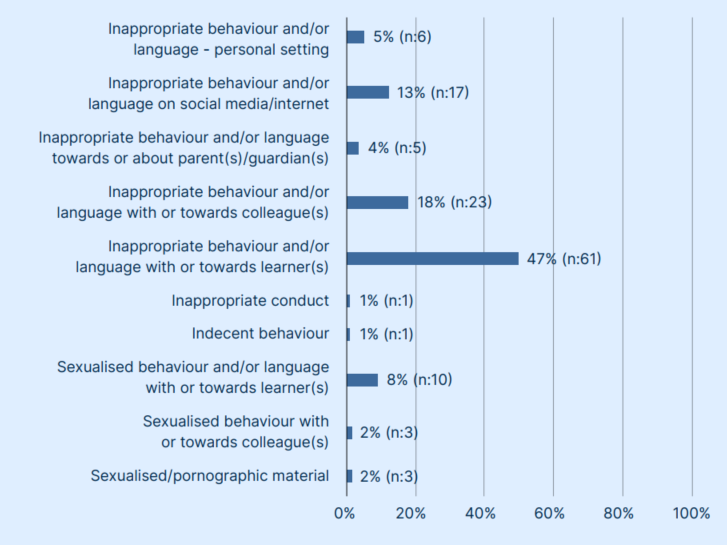
There were 130 cases considered that involved allegations related to inappropriate behaviour and/or language. Almost half (47%) of these cases involved allegations of inappropriate behaviour and/or language with or towards learners. Almost one-fifth (18%) involved allegations of inappropriate behaviour and/or language with or towards colleagues.
<span id="es-chart-01" class="table_caption" style="text-align:center; margin: auto; display: block; padding-top: 3.5rem;" fs-test-element="reg-report-title-es-chart-01">Detailed allegation analysis for inappropriate behaviour/language cases 2017 to 2022</span>
Inappropriate relationship(s) allegations
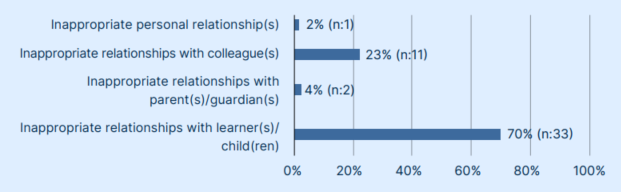
A total of 47 cases involved allegations relating to inappropriate relationships. Almost three-quarters (70%) of these related to allegations of inappropriate relationships with learners or children.
<span id="es-chart-01" class="table_caption" style="text-align:center; margin: auto; display: block; padding-top: 3.5rem;" fs-test-element="reg-report-title-es-chart-01">Detailed allegation analysis for inappropriate relationship(s) cases 2017 to 2022</span>
Processes/procedures allegations
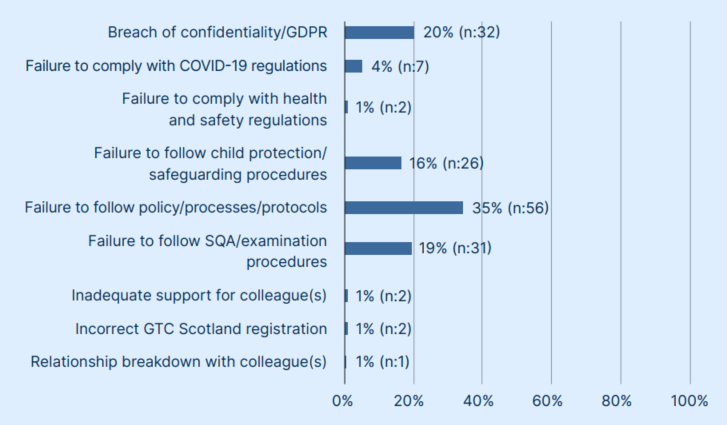
There were 159 cases considered that involved allegations related to processes and procedures. Just over one-third (35%) of cases related to allegations of failures to follow general policies, processes or protocols. One-fifth (20%) of cases related to breaches in confidentiality and/or data protection law (GDPR), and a further one-fifth (19%) of cases related to failures to follow SQA or examination procedures.
<span id="es-chart-01" class="table_caption" style="text-align:center; margin: auto; display: block; padding-top: 3.5rem;" fs-test-element="reg-report-title-es-chart-01">Detailed allegation analysis for processes/procedures cases 2017 to 2022</span>
Verbal/physical aggression allegations
A total of 210 cases that involved allegations of verbal and/or physical aggression were considered. Almost half (43.8%) of these involved allegations of verbal and/or physical aggression towards learners or children. One-fifth (21.9%) related to allegations of assault or violent behaviour.
<span id="es-chart-01" class="table_caption" style="text-align:center; margin: auto; display: block; padding-top: 3.5rem;" fs-test-element="reg-report-title-es-chart-01">Detailed allegation analysis for verbal/physical aggression cases 2017 to 2022</span>

Alcohol/drugs allegations
Our analysis has found that a total of 22 cases were considered that involved allegations related to alcohol and/or drugs. Almost half (46%) of these allegations related to use of alcohol or drugs in the workplace or other professional settings. The other half of cases were related to drugs offences.
<span id="es-chart-01" class="table_caption" style="text-align:center; margin: auto; display: block; padding-top: 3.5rem;" fs-test-element="reg-report-title-es-chart-01">Detailed allegation analysis for alcohol/drugs cases 2017 to 2022</span>
Bullying/discrimination allegations
A total of 62 cases were considered that involved allegations related to bullying and/or discrimination. Just over two-thirds (68%) of bullying and/or discrimination cases related to allegations of behaviours that occurred with colleagues or learners. One-fifth (21%) of cases related to allegations of use of discriminatory language online or on social media.
<span id="es-chart-01" class="table_caption" style="text-align:center; margin: auto; display: block; padding-top: 3.5rem;" fs-test-element="reg-report-title-es-chart-01">Detailed allegation analysis for bullying/discrimination cases 2017 to 2022</span>
Child abuse/neglect allegations
We considered a total of 38 cases that involved allegations related to child abuse and/or neglect. Almost three-quarters (71%) of child abuse/neglect cases related to some form of sexual misconduct. One-third (34%) of cases related to cases of sexual abuse within a school or professional setting, with a further 3 cases (8%) relating to inappropriate relationships with learners. One-fifth (21%) of these cases related to the possession or making of indecent images of children.
<span id="es-chart-01" class="table_caption" style="text-align:center; margin: auto; display: block; padding-top: 3.5rem;" fs-test-element="reg-report-title-es-chart-01">Detailed allegation analysis for child abuse/neglect cases 2017 to 2022</span>
Child/adult safeguarding allegations
There were 31 cases considered that involved allegations related to child or vulnerable adult safeguarding. Most (84%) child or vulnerable adult safeguarding cases related to failures to follow safeguarding procedures.
<span id="es-chart-01" class="table_caption" style="text-align:center; margin: auto; display: block; padding-top: 3.5rem;" fs-test-element="reg-report-title-es-chart-01">Detailed allegation analysis for child/adult safeguarding cases 2017 to 2022</span>
Dishonesty allegations
Dishonesty is a common allegation seen in our cases. There were 181 allegations involving dishonesty. Two-thirds (67%) of these related to allegations of misrepresentation of information, provision of misleading information or withholding information.
<span id="es-chart-01" class="table_caption" style="text-align:center; margin: auto; display: block; padding-top: 3.5rem;" fs-test-element="reg-report-title-es-chart-01">Detailed allegation analysis for dishonesty cases 2017 to 202</span>
Driving offence allegations
There were 169 cases that related to driving offences. Almost half (43.8%) of these related to allegations of drink driving. One-fifth (20.7%) were allegations of speeding. Twenty-five (14.8%) cases were allegations of careless or dangerous driving.
<span id="es-chart-01" class="table_caption" style="text-align:center; margin: auto; display: block; padding-top: 3.5rem;" fs-test-element="reg-report-title-es-chart-01">Detailed allegation analysis for driving offence cases 2017 to 2022</span>
Inadequate learner care/support allegations
Fifty-seven cases related to allegations of inadequate learner care or support. Just over one-third (35%) of these related to allegations of failing to provide an adequate or inclusive learning environment. Just over a quarter (28%) of cases involved general allegations of inadequate learner care.
<span id="es-chart-01" class="table_caption" style="text-align:center; margin: auto; display: block; padding-top: 3.5rem;" fs-test-element="reg-report-title-es-chart-01">Detailed allegation analysis for inadequate learner care/supportcases 2017 to 2022</span>
Inappropriate behaviour/language allegations
There were 130 cases considered that involved allegations related to inappropriate behaviour and/or language. Almost half (47%) of these cases involved allegations of inappropriate behaviour and/or language with or towards learners. Almost one-fifth (18%) involved allegations of inappropriate behaviour and/or language with or towards colleagues.
<span id="es-chart-01" class="table_caption" style="text-align:center; margin: auto; display: block; padding-top: 3.5rem;" fs-test-element="reg-report-title-es-chart-01">Detailed allegation analysis for inappropriate behaviour/language cases 2017 to 2022</span>
Inappropriate relationship(s) allegations
A total of 47 cases involved allegations relating to inappropriate relationships. Almost three-quarters (70%) of these related to allegations of inappropriate relationships with learners or children.
<span id="es-chart-01" class="table_caption" style="text-align:center; margin: auto; display: block; padding-top: 3.5rem;" fs-test-element="reg-report-title-es-chart-01">Detailed allegation analysis for inappropriate relationship(s) cases 2017 to 2022</span>
Processes/procedures allegations
There were 159 cases considered that involved allegations related to processes and procedures. Just over one-third (35%) of cases related to allegations of failures to follow general policies, processes or protocols. One-fifth (20%) of cases related to breaches in confidentiality and/or data protection law (GDPR), and a further one-fifth (19%) of cases related to failures to follow SQA or examination procedures.
<span id="es-chart-01" class="table_caption" style="text-align:center; margin: auto; display: block; padding-top: 3.5rem;" fs-test-element="reg-report-title-es-chart-01">Detailed allegation analysis for processes/procedures cases 2017 to 2022</span>
Verbal/physical aggression allegations
A total of 210 cases that involved allegations of verbal and/or physical aggression were considered. Almost half (43.8%) of these involved allegations of verbal and/or physical aggression towards learners or children. One-fifth (21.9%) related to allegations of assault or violent behaviour.
<span id="es-chart-01" class="table_caption" style="text-align:center; margin: auto; display: block; padding-top: 3.5rem;" fs-test-element="reg-report-title-es-chart-01">Detailed allegation analysis for verbal/physical aggression cases 2017 to 2022</span>

End of document
"
"
"
"
"
"


4
/
5